
Sold by: Productboard
Deployed on AWS
Contact aws-marketplace@productboard.com for private offer.
4.3
Overview
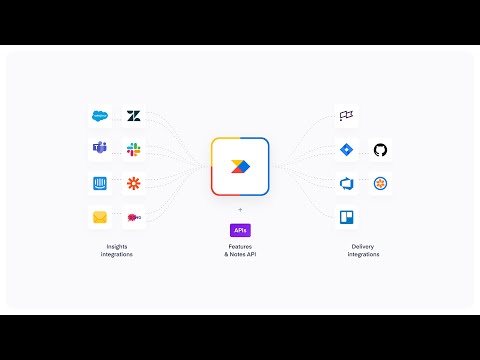
Productboard is the intelligent product management platform that helps future-ready product teams deliver exceptional products with clarity and confidence. Over 6,000 companies, including Zoom, One Medical, Cartier, Microsoft, and Korn Ferry, use Productboard to uncover customer needs, drive strategic alignment, and rally everyone around the roadmap. With offices in Prague and San Francisco, Productboard is backed by leading investors like Dragoneer Investment Group, Tiger Global Management, Index Ventures, Kleiner Perkins, Sequoia Capital, Bessemer Venture Partners, and Credo Ventures. For custom pricing or private offers, please reach out to us at aws-marketplace@productboard.com .
Highlights
- Empower Product Teams. Operate with greater velocity and purpose by having clear prioritization, standardized processes, centralized workflows, and visibility into progress across the team.
- Empower the Organization. Drive the business forward faster by inspiring everyone with the product vision and strategy and improving cross-functional collaboration.
- Empower the Customer. Create exceptional products rooted in customers actual needs, both current and future, by having the voice of the customer inform and validate every product decision.
Details
Sold by
Delivery method
Deployed on AWS
New
Introducing multi-product solutions
You can now purchase comprehensive solutions tailored to use cases and industries.

Features and programs
Buyer guide
Gain valuable insights from real users who purchased this product, powered by PeerSpot.

Financing for AWS Marketplace purchases
AWS Marketplace now accepts line of credit payments through the PNC Vendor Finance program. This program is available to select AWS customers in the US, excluding NV, NC, ND, TN, & VT.

Pricing
Pricing is based on the duration and terms of your contract with the vendor. This entitles you to a specified quantity of use for the contract duration. If you choose not to renew or replace your contract before it ends, access to these entitlements will expire.
Additional AWS infrastructure costs may apply. Use the AWS Pricing Calculator to estimate your infrastructure costs.
Dimension | Description | Cost/36 months |
|---|---|---|
Productboard | Contact aws-marketplace@productboard.com for private offer. | $1,000,000.00 |
Dimensions summary
This listing uses a single contract-based pricing option. You do not pick from set tiers on AWS Marketplace. Instead, you contact the vendor directly to arrange a private offer tailored to your needs. Pricing centers on the number of makers in your workspace. Makers are the product managers and leads who own strategy, create roadmaps, and manage insights. Contributors, who submit feedback and collaborate, do not count toward this total. The platform's AI features run on a monthly credit allocation. Because terms are negotiated privately, the quantity, subscription length, and included capabilities are set through your order form with the vendor.
Top-of-mind questions for buyers
Makers are the product managers and leads who own strategy, create roadmaps, prioritize features, and manage insights. Pricing is based on the number of makers in your workspace. Contributors submit feedback, tag insights, and collaborate through documents and comments. Contributors do not count toward your maker total.
Credits power the platform's AI features, from analyzing feedback to generating documents. Different tasks use different amounts based on complexity. If credits run out, you keep access to your workspace, documents, and feedback. You cannot use AI features until credits reset at your monthly renewal or you buy a top-up.
You can add makers at any time. Incremental fees are prorated over the remaining subscription term. If your maker use exceeds the purchased level, the vendor notifies you and you can correct it within 30 days without charge. AI credit overages are consumed on use and billed as one-time bundles.
www.productboard.com+1
Helpful?
Vendor refund policy
Please see MSA for refund related information

Legal
Vendor terms and conditions
Upon subscribing to this product, you must acknowledge and agree to the terms and conditions outlined in the vendor's End User License Agreement (EULA) .
Content disclaimer
Vendors are responsible for their product descriptions and other product content. AWS does not warrant that vendors' product descriptions or other product content are accurate, complete, reliable, current, or error-free.
Delivery details
Software as a Service (SaaS)
SaaS delivers cloud-based software applications directly to customers over the internet. You can access these applications through a subscription model. You will pay recurring monthly usage fees through your AWS bill, while AWS handles deployment and infrastructure management, ensuring scalability, reliability, and seamless integration with other AWS services.
Resources
Vendor resources
Support
Vendor support
Productboard is a product management tool that provides comprehensive support resources for its users. These resources include a help center with articles and tutorials, an academy with online courses and webinars, a community forum, email and chat support, a blog, and a YouTube channel. The resources cover a range of topics related to product management, including product strategy, prioritization, and roadmap planning. Productboard provides several options for users to contact their support team. The easiest way is through the Help Center, where users can search for articles, submit a request, or chat with support directly. Additionally, users can email their support team at support@productboard.com . Access the Help Center at
AWS infrastructure support
AWS Support is a one-on-one, fast-response support channel that is staffed 24x7x365 with experienced and technical support engineers. The service helps customers of all sizes and technical abilities to successfully utilize the products and features provided by Amazon Web Services.
Updated weekly


Top
50
In Project Management
Top
25
In Agile Lifecycle Management
Top
10
In Project Management, Agile Lifecycle Management, Collaboration & Productivity
Sentiment is AI generated from actual customer reviews on AWS and G2
Functionality
Ease of use
Customer service
Cost effectiveness
Positive reviews
Mixed reviews
Negative reviews
AI generated from product descriptions
Centralized Workflow Management
Provides centralized workflows and standardized processes for product team operations with visibility into progress tracking across team members.
Customer Feedback Integration
Incorporates voice of customer data to inform and validate product decisions based on actual customer needs.
Product Roadmap Collaboration
Enables cross-functional collaboration and alignment around product vision, strategy, and roadmap visibility across the organization.
Prioritization Framework
Offers clear prioritization mechanisms to support product decision-making and resource allocation.
Product Strategy Alignment
Facilitates strategic alignment and communication of product vision across product teams and organizational stakeholders.
Workflow Customization
Tailor product development processes around unique product strategy with customizable features for development teams
Task Automation
Automate task assignments, notifications, and workflow integrations with third-party tools such as Slack and GitHub
Cross-Department Collaboration
Unified collaborative platform that synchronizes across multiple departments to align entire organization
Agile Project Planning
Support for agile team planning and execution capabilities to deliver products faster
Workflow Integration
Integration capabilities with external tools and services to streamline development workflows
AI-Powered Automation
AI agents (Sidekicks) and visual workflows (Flows) automate complex processes including requirements generation, diagram creation, and prototype development from visual context.
Enterprise Knowledge Integration
Amazon Q Business integration surfaces enterprise knowledge directly on the canvas, and Amazon Bedrock powers AI workflows for intelligent automation.
AWS-Native Architecture Diagramming
Native architecture diagramming capabilities with AWS shape libraries, reference architectures, and AWS Cost Calculator integration for migration planning and cost estimation.
Model Context Protocol Connectivity
MCP server connectivity with Kiro maintains context throughout the development lifecycle and connects to execution tools.
Visual Collaboration Canvas
Intelligent canvas platform enabling distributed teams to visualize complex cloud infrastructures, align stakeholders, and compress project cycles from discovery through execution.
Standard contract
No
No
No
Customer reviews
Darrin E.
BE CAREFUL: ProductBoard will happily keep your annual payment and then break your integrations!!!
Reviewed on Sep 01, 2026
Review provided by G2
What do you like best about the product?
ProductBoard allowed us to catalog Insights from customers from a variety of locations - allowing us to crowdsource customer feedback across our team and acting as a database for that information. What we liked best was some of the integrations and the API. Unfortunately for us ProductBoard changed the API shortly after our renewal breaking our integrations... making this aspect of ProductBoard useless to us now.
What do you dislike about the product?
Unfortunately for us ProductBoard changed their APIs shortly after our renewal breaking our operational integrations. The investment to change our integrations didn't make sense compared to the cost of rehoming the Insights database to a newer internal app for Jobs to Be Done... making this aspect of ProductBoard and pretty much the only reason we use it useless to us now.
What problems is the product solving and how is that benefiting you?
We no longer use product board. We've decided to replace this with an internal app targeted toward precisely our need. Using things like Chat GPT and Claude we were able to do this in an afternoon and we have exactly what we need now!
Mudit R.
Accelerated Collaboration and Innovation with Intuitive UI
Reviewed on Aug 26, 2026
Review provided by G2
What do you like best about the product?
I really like the lightweight UI/UX and great speed of Productboard, which makes it super easy to collaborate with other product managers and engineering teams on roadmaps and tracking PRDs. Additionally, the integration with Slack is a huge plus, allowing me to work in Productboard via Slack and making the user experience quite frictionless. These features have significantly accelerated the pace of innovation for our team, as earlier it was difficult to collaborate across multiple PMs, but now everyone can easily see and provide input on each other's work.
What do you dislike about the product?
I find the help documents and the onboarding new user guide lacking. I think it needs a more modern tutorial for the first-time user.
What problems is the product solving and how is that benefiting you?
Productboard accelerates our innovation by making collaboration across multiple PMs easy. I love the fast performance and integration with Slack, which reduces usage friction.
Dhaneshwaran Dhaneshwaran
Centralized feedback has improved traceability and prioritization but AI capabilities still grow
Reviewed on Aug 25, 2026
Review from a verified AWS customer
What is our primary use case?
I primarily use Productboard for two things: requirement management to capture business requirements and maintain traceability, and as a central location for storing customer feedback.
Our customer success team uses Productboard for customer feedback, which we also use to roadmap based on complaints that we have received.
For a recent example of how I use Productboard for requirement management and customer feedback, I was working with various teams, and multiple feedbacks were coming in.
I log these multiple feedbacks, and from there, the product management team addresses the issues and helps the sales team with upsell opportunities.
What is most valuable?
The best features Productboard offers are the feedback and insights, which stand out because we get a centralized location where all feedback is stored.
From my perspective, feature prioritization, the product roadmap, and the customer portal are very helpful for traceability.
When things go down the drain, we can always trace back to where feedback came from, and user need or feature prioritization is really valuable for me.
When I share about feature prioritization and product roadmap from my experience, I have 15 customers with 10 repeat features from each customer. Based on that, I could evaluate the impact, how many customers need it, and what value it provides. This is part of our business objective, and another consideration is regulatory changes.
I noticed that there is a very big change coming up, and many of our customers in the similar domain are starting to ask for the same feature. Based on that, we could figure out the priority. Productboard breaks down the board into four different areas.
Productboard has positively impacted my organization by reducing the churn rate by two percent.
What needs improvement?
I do not see a major scope for improvement at this time, but I see more potential for GenAI. I'm seeing a GenAI scope of improvement, which is why I chose a rating of seven out of ten.
For how long have I used the solution?
I have been using Productboard for close to two years.
What other advice do I have?
My advice to others looking into using Productboard is to give your time, talk to the team, and talk to the pre-sales engineer. This feels like a slow burn.
Regarding Productboard's AI capabilities, I think its governance and security are top-notch. I also feel that the accuracy and reliability of Productboard's AI output are top-notch. I am rating this review a seven out of ten.
reviewer2882148
Roadmaps have become centralized for collaboration but have still created confusion for teams
Reviewed on Aug 08, 2026
Review provided by PeerSpot
What is our primary use case?
My main use cases for Productboard are numerous, but road mapping and presentations are the top two.
A specific example of how I use Productboard for road mapping is that we have many internal roadmaps, and we want to have a unique source of view for organizing different products and roadmaps where internal and external stakeholders can contribute. We have the possibility to have a cabin board that is objective-based and so on.
I have many product use cases for Productboard. Prioritization insights are another important one, but road mapping is the most important.
How has it helped my organization?
Productboard has impacted my organization, but I would say the impacts are quite weak. From a business perspective, we did not really see much positive effect from Productboard. The product is sometimes very slow and performance is an imitation compared with competitors' products.
What is most valuable?
The best features Productboard offers are the insights along with the possibility to have the impacts. Frameworks where you can see what the impact of the feature is from a business value perspective with effort into value are among the most useful use cases.
The insights and impact frameworks help my team significantly because we have many customers who write to us about what they would like in our product. It is a way to communicate and have a standardized process to get feedback from customers.
What needs improvement?
I would like to add features such as integration with Jira and other similar tools. Integration is important.
Productboard can be improved in several areas. There is potential for better AI integration, stronger integration with Jira and the direction product, stronger integration with all engineering tools, improved scalability, and more comprehensive prioritization models.
I would appreciate improvements regarding user experience and support. User experience is tricky and sometimes slow, and there are no benefits for Teams. It should be much better for stakeholder communication and the UX for Teams should be simplified, especially for sales. Regarding Productboard's AI capabilities, governance and security are quite modest, and I do not see any signs in the accuracy and reliability of output.
For how long have I used the solution?
I have been using Productboard since eighteen months.
What do I think about the stability of the solution?
Productboard is stable, more or less.
What do I think about the scalability of the solution?
Scalability is very low with Productboard.
How are customer service and support?
I would rate Productboard's customer support as seven out of ten.
Which solution did I use previously and why did I switch?
I previously used different solutions before Productboard. I used another solution, Jira, and Craft. We also used Notion, with which we were not happy, but we were more happy than we are now.
What was our ROI?
I have not seen a return on investment with Productboard. It still creates confusion in the sales and PM teams, so I did not see any return.
What's my experience with pricing, setup cost, and licensing?
My experience with Productboard's pricing, setup cost, and licensing is that you contact their sales teams directly as they approach you. The price is standard and average, nothing exceptionally good or expensive. We have quite a few people using it, more than two hundred or three hundred seats, I guess.
Which other solutions did I evaluate?
Before choosing Productboard, I did evaluate more than twenty-five other options.
What other advice do I have?
The advice I would give to others looking into using Productboard is that for a really small team, it is still adequate and not bad. However, if you have many teams across different geographies with big roadmaps, many partners, and many people, the situation changes. I rated this review as five out of ten.
reviewer2884494
Centralized roadmaps have aligned teams and now improve customer-driven market decisions
Reviewed on Aug 04, 2026
Review provided by PeerSpot
What is our primary use case?
At Megaport, I use Productboard to build a roadmap of all the initiatives, projects, and features the team is working on. This includes the front end of the roadmap showing what is in the backlog and all the things that could potentially be worked on by the development and product team, then the actual roadmap, and timelines on delivery.
Productboard has a feature that I love where you can create tiles that serve as summaries. In this case, I created a summary of potential markets that Megaport was going to enter, including Stockholm, Miami, Copenhagen, and São Paulo. The valuable aspect of Productboard is that you can share these tiles with customers and ask them to vote on them and comment on them. This was invaluable in determining where Megaport should launch next. We decided to go into Stockholm and Miami because the customer feedback was overwhelming for those two markets.
I built the roadmap of all the initiatives in flight, including all project initiatives and features that the development team and product leaders were working on. For each initiative, I developed a summary describing what we were trying to do, the business value, and how this would impact customers. This roadmap was available and used by all internal stakeholders across engineering, product, and sales, serving as the definitive source for what was in flight and when it would be coming. Productboard is really good for this purpose.
What is most valuable?
The ability to expose potential work through tiles and share those ideas with customers to get their feedback is a valuable feature. I also appreciate Productboard's roadmap capability where you can build the roadmap and tag different items such as projects, initiatives, and features with different criteria. You can sort them by due date, by what market segments they are impacting, whether they affect service providers, enterprises, or retail customers. There are different ways to filter the initiatives being displayed on the roadmap and quickly understand how it will impact timelines and customers.
Creating that transparency and keeping everyone—engineering, product, and sales—on the same page was beneficial. These stakeholders could log into Productboard and see what was being worked on and when it would be deployed. Everyone in the company remained on the same page.
What needs improvement?
I am a huge fan and believe Productboard was a good partner for Megaport during my time at the company. I have no complaints about the product itself. My only consideration involves the fact that Megaport is a small company with about 250 people. We originally purchased a 15 seat license agreement, and about a year after we made that deal, it became apparent that we really only needed two, three, or four seats. Productboard was not as quick as one would hope to adjust our contract to align with our actual needs, which was a challenge for a very small company with limited finances.
Licensing flexibility is the main area for improvement. The features, functionality, and how we used Productboard was really good. The lack of flexibility around licensing was the only challenge for us as a small company.
When I arrived, the agreement had already been set up where we had 15 licenses, and after being there for a year, we quickly realized we only needed two to three licenses because there were not many content creators, though there were about 100 content viewers. When we asked to scale back our licenses, we encountered considerable friction. This was the primary issue we faced.
What do I think about the stability of the solution?
I experienced no issues with lag or downtime. I should note that Megaport is a small company, so at most we would have probably 20 to 30 users visiting my roadmap or the customer tiles. We were not a big enterprise with thousands of people using the application.
What do I think about the scalability of the solution?
I encountered no scalability issues, though I should caveat this by noting that we were growing from a user base of about 5 to 10 to 50 to 100, not from 500 to 1,000 to 10,000. This is an order of magnitude smaller, but Productboard worked perfectly fine for our needs.
How are customer service and support?
I would give Productboard a 10 on customer service. It is very easy to get into and start playing around with it because it is very user-friendly. You learn by doing, but it is very easy to figure out how things work.
Which solution did I use previously and why did I switch?
When I arrived at Megaport, they had already purchased and had an agreement with Productboard. I simply took that on, and we remained fans of Productboard. The only challenge was backing off the 15 user seat license agreement and getting it down to something more manageable, such as two to three seats.
How was the initial setup?
When I arrived, we were already using Productboard. From what I recall, the company went with Productboard straight out. It was very stable during my time there.
What other advice do I have?
Productboard is really good at enabling stakeholders to use it effectively. For example, a salesperson meeting with a customer could go into Productboard and see the features that the development team or product leaders were working on and tell the customer that these three features would likely be available in Q3 of next year, or that this project and feature would help them be more efficient and the project would be available in the coming month with the feature being prioritized for one quarter out. This had a really positive effect with customers, bringing them closer together and creating stickiness with Megaport and our development team.
Productboard absolutely helped with customer satisfaction because we also took that product roadmap and displayed it for customers, sharing the customer roadmap with them. Internal operating efficiency also improved because internal communication meant that everyone was on the same page with no miscommunication about what was expected to be delivered when. As part of this process, I met with the development teams and product teams weekly, and every Wednesday afternoon, I would update the roadmap with new additions and whether deliverables were getting delayed or moving up. The roadmap remained current. Internal efficiencies in communication meant that everyone was on the same page.
I did not use training materials at all. Everything was learned by trying things out and figuring them out. I cannot comment on how good those training materials were because we operated in a learn-by-fire environment.
At the time I used it, I thought it was pretty good, but I was not using the integration capabilities very much. I did not test that functionality. I used Productboard more as a communicator and as an evolving whiteboard where we updated the roadmap and made it available for all. There was some integration involved, but not much.
We used Productboard primarily for roadmap and tiles, so it was customizable, but I am not certain we were pushing the envelope on trying to do more customization. It was fairly customizable for how we used it, but we did not push the limits on customization.
Productboard is a great solution and it is probably faster to just go in and try it out and figure things out. If you get stuck, either talk to support or read the documentation, as it is very user-friendly. It is probably more efficient to just dig into it. I would give Productboard a rating of 9 out of 10.