AWS for Industries
Bridging the Knowledge Gap: Using Generative AI on AWS to Preserve Critical Expertise
In modern manufacturing, the ability to quickly access critical information and use the expertise of experienced operators is essential for maintaining high productivity and quality, as well as minimizing costly machine downtime. However, as skilled workers retire or move on and the workforce landscape changes, manufacturers often face the challenge of preserving institutional knowledge and ensuring smooth knowledge transfer to new and junior personnel. This is important to address because according to a Deloitte study 2.69 million manufacturing positions are expected to become available due to retirement, while an additional 1.96 million new positions will be created through natural growth. Even more concerning, they state 53% of open positions may remain unfilled due to the skills shortage in the manufacturing industry, highlighting the urgent need for effective knowledge transfer and preservation strategies.
The leadership team at Georgia-Pacific, a leading manufacturer of tissue, pulp, paper, packaging, and building products, recognized they faced the same challenge other manufacturers struggle with: workers spending hours searching for troubleshooting information when problems arise. They needed to transform their knowledge management approach to make critical information accessible within seconds rather than hours. Using Amazon Web Services’ generative AI capabilities, they built a centralized knowledge hub that gives operators immediate access to the guidance they need. This solution helped their teams quickly resolve production issues, reduce material defects, and minimize waste.
This blog will explore how to implement a generative AI solution using Amazon Bedrock, a comprehensive, secure, and flexible platform for building generative AI applications and agents. This solution helps manufacturing companies to accelerate operator transition and onboarding, capture the expertise of seasoned employees, and minimize machine downtime across its vast manufacturing operations.
The gaps we bridge
Many manufacturing workers struggle with time-consuming research and discovery across disparate knowledge systems when looking for information. This is particularly challenging in industries with complex systems and maintenance requirements, where a single experienced technician’s departure can create immediate operational setbacks.
As technological advancement accelerates and workforce demographics shift, organizations must prioritize systematic knowledge transfer programs that bridge the gap to maximize operational impact and sustain business productivity.
Some of the key challenges faced by the manufacturing companies include:
- Lack of Centralized, Accessible Knowledge: The absence of a centralized, readily available knowledge base makes it difficult for workers to find the right information quickly when issues arise. Workers must search through multiple systems, contact experts, or review physical documentation and all these delay problem resolutions. This leads to reduced machine productivity, prolonged downtime, and higher troubleshooting and repair costs across manufacturing facilities.
- Risk of Losing Institutional Knowledge: As experienced operators who spent decades running the production line retire or move on, manufacturers face the risk of losing valuable institutional knowledge.
- Inadequacy of Traditional Knowledge Management Approaches: Relying on phone calls to experts or searching through physical documentation is insufficient in fast-paced, data-driven manufacturing environments, often increasing the time to resolve issues and the risk of downtime.
Manufacturers need a scalable, effective solution that consolidates disparate information, makes it accessible to machine operators, and helps preserve the expertise of their most knowledgeable employees to safeguard institutional knowledge and improve operational efficiency.
Solution overview
Georgia-Pacific tackled these manufacturing challenges by creating an AI-powered assistant called ChatGP on Amazon Bedrock. They worked with AWS to build a system that combines a chatbot, built using Claude foundation model via Amazon Bedrock, with real-time machine data to help operators solve problems and improve production.
Georgia-Pacific’s team recorded conversations with experienced workers and subject matter experts about older equipment that lacked proper documentation. The team used Amazon Bedrock to transform these discussions into structured technical documentation. This helped preserve decades of tribal knowledge that previously existed only in their veteran employee’s heads.
The system helps operators in real-time by providing step-by-step guidance for machine adjustments and troubleshooting. Since the system connects to machine sensors, it combines historical knowledge with current operating conditions to give more accurate advice. Operators access this through a simple web interface from any computer or tablet on their network.
Georgia-Pacific’s success with ChatGP demonstrates the potential of AI-powered knowledge management in manufacturing environments. The solution outlined below helps manufacturers build a similar knowledge-management system that uses a chatbot to capture institutional knowledge from experienced operators, provide instant access to troubleshooting guidance, and accelerate new employee onboarding. This approach allows organizations to preserve decades of tribal knowledge while empowering their workforce with immediate, contextual answers to complex operational challenges—transforming knowledge transfer from a time-consuming manual process into an efficient, scalable digital solution.
Solution Architecture

Figure 1: High-level Solution Architecture for Knowledge Management Chat Bot Assistant
This solution outlines how you can implement a knowledge management chat bot assistant using Amazon Bedrock. The solution is broken down into four key steps:
- Knowledge Capture: Senior machinists record machine-related information through a web interface, which is then uploaded to Amazon Simple Storage Service (Amazon S3), an object storage service that serves as the primary repository for all informational assets.
- Automated Transcription: Amazon Transcribe converts the uploaded recordings from speech to text, making the senior machinists’ expertise searchable and accessible in written format.
- Knowledge Base Creation: The transcribed text serves as the data source for the knowledge base in Amazon Bedrock, forming the foundation of the generative AI-powered knowledge hub.
- Intelligent Response Generation: Junior machinists access a Q/A chatbot interface where they can ask questions in simple natural language about machine operations, troubleshooting, and maintenance. When a junior machinist submits a query, it utilizes Amazon Bedrock text generation language model in conjunction with the knowledge base to facilitate Retrieval-Augmented Generation (RAG), providing relevant and contextual responses.
In Figures 2 and 3, we share videos that showcase two main workflows of this solution in action. The first workflow, as shown in Figure 2, demonstrates how a machinist can create and upload a recording. Once uploaded, as shown in Figure 3, the system automatically converts the recording into text and stores it as a knowledge base within Amazon Bedrock. The second workflow illustrates how machinists can easily troubleshoot issues by asking questions using simple natural language prompts.
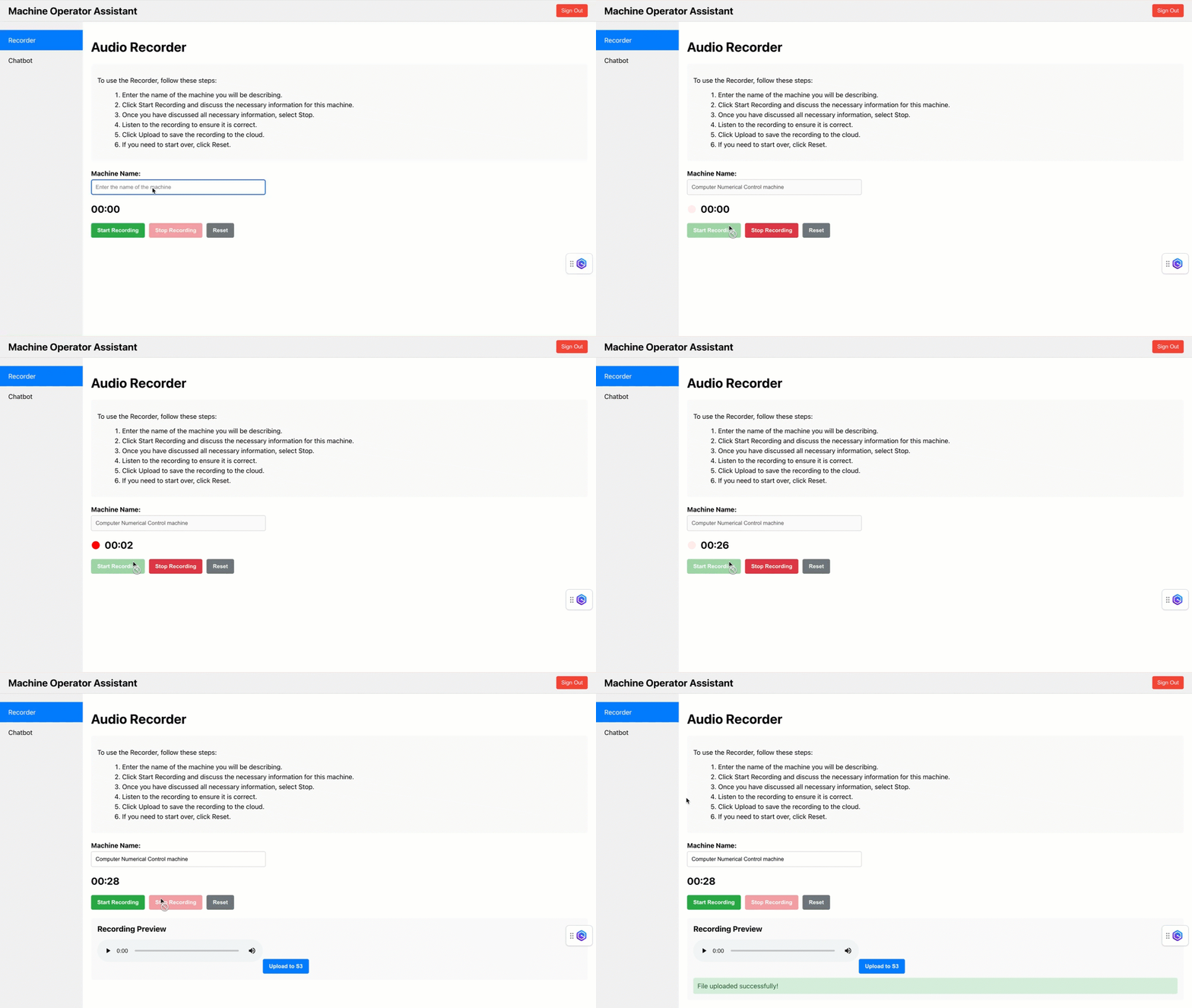
Figure 2: Machine Operator Assistant workflow 1
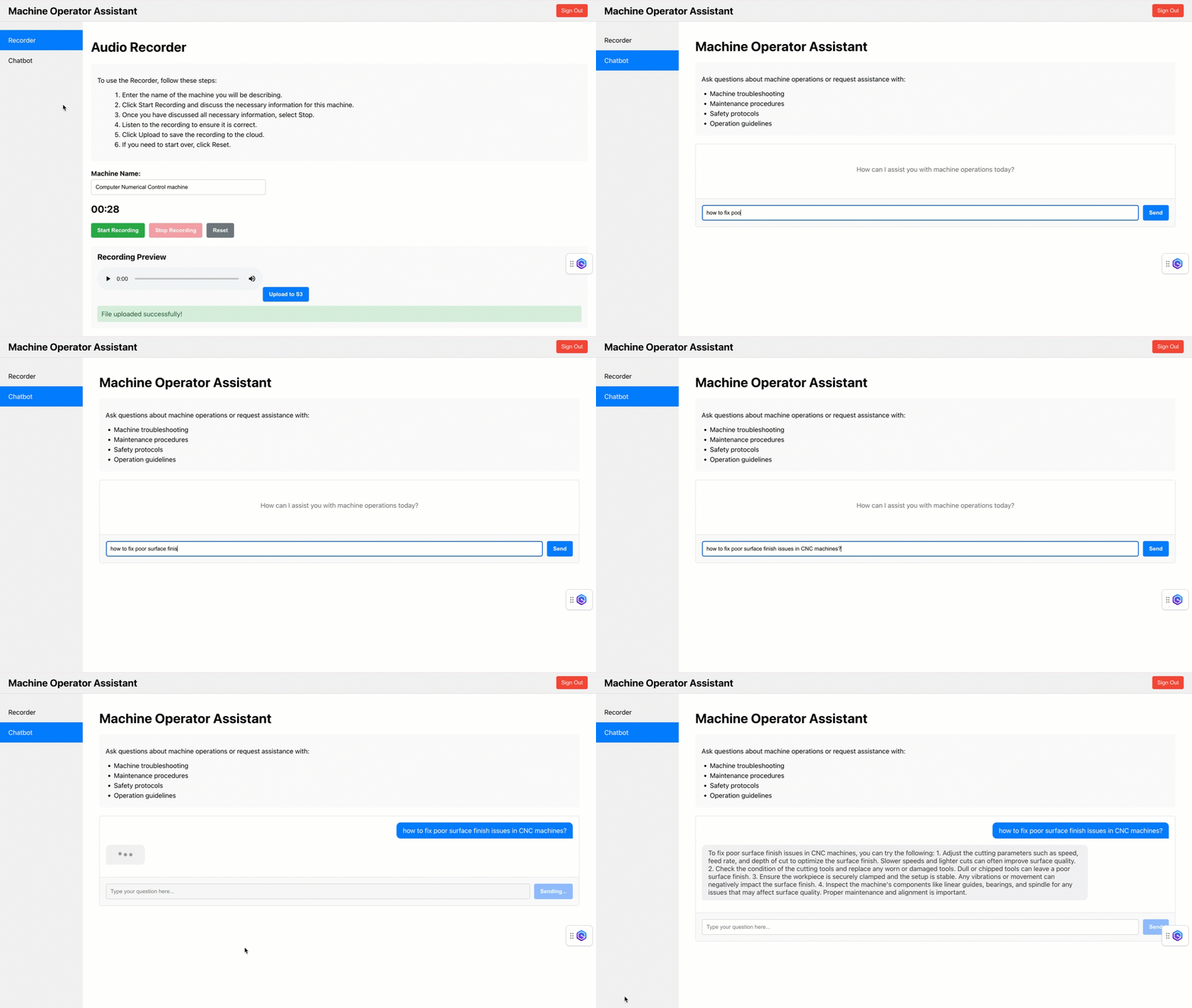
Figure 3: Machine Operator Assistant workflow 2
Conclusion
By implementing an AI-powered knowledge hub with Amazon Bedrock, manufacturers reduce troubleshooting time from hours to seconds, preserve institutional knowledge from retiring workers, and accelerate operator onboarding.
Georgia-Pacific’s success with generative AI on AWS demonstrates how manufacturers can address longstanding operational challenges. By consolidating disparate information into a centralized knowledge base, companies reduce machine downtime, lower repair costs, and preserve critical expertise for future generations, serving as a blueprint for operational excellence.
Discover our comprehensive manufacturing and industrial solutions in the AWS Solutions Library and connect with your AWS account team to explore how AWS drives manufacturing innovation. For deeper insights into generative AI’s transformative impact across product engineering, production optimization, and supply chains in manufacturing, we invite you to explore our blog How Generative AI will transform manufacturing.