AWS Database Blog

Consolidate data from identical SQL Server databases into a single Amazon RDS for SQL Server database using AWS DMS
Organizations often choose from commonly used migration strategies for their on-premises to cloud migration. The choice depends on various factors, including target state goals and business outcomes (for more information, see Your cloud transformation journey). In this post, we discuss a re-platforming strategy where you consolidate data from multiple on-premises SQL Server database servers to […]

Explore the semantic knowledge graphs without SPARQL using Amazon Neptune with Rhizomer
This is a guest post written by Roberto García, Associate Professor and Deputy Vice-rector for Research & Transfer at Universitat de Lleida, Spain. In this post, we illustrate how to use the Rhizomer web application to interact with knowledge graphs available as semantic data from an Amazon Neptune instance through its SPARQL endpoint. Neptune is […]

Automate Amazon RDS backups using the Oracle RMAN utility and upload backup files to Amazon S3
In this post, we show you how to automate creation of Oracle RMAN backups on an RDS database and upload RMAN backup files to Amazon S3, providing a cost-effective solution to store database backups for longer periods of time. We use AWS Lambda and Amazon SNS to notify database administrators on the status (completion or failure) of the automation task.
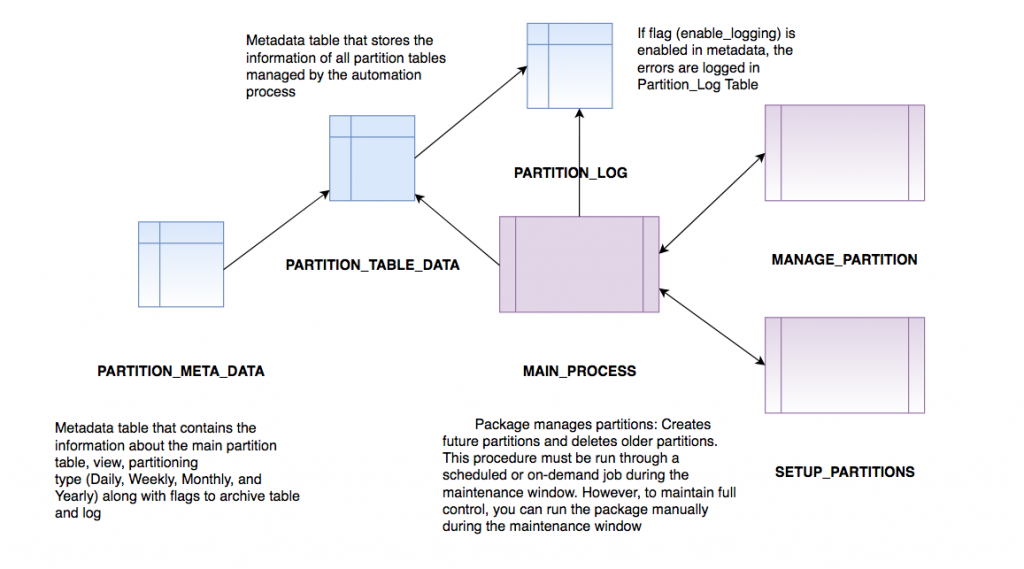
Implementing table partitioning in Oracle Standard Edition: Part 2
Organizations are adopting the cloud as a standard and actively evaluating their database needs. Amazon Relational Database Service (Amazon RDS) for Oracle is a managed service that makes it easy to quickly create Oracle database instances, enabling you to migrate existing on-premises workloads to the cloud. Migration from on-premises Oracle Database to Amazon RDS for […]
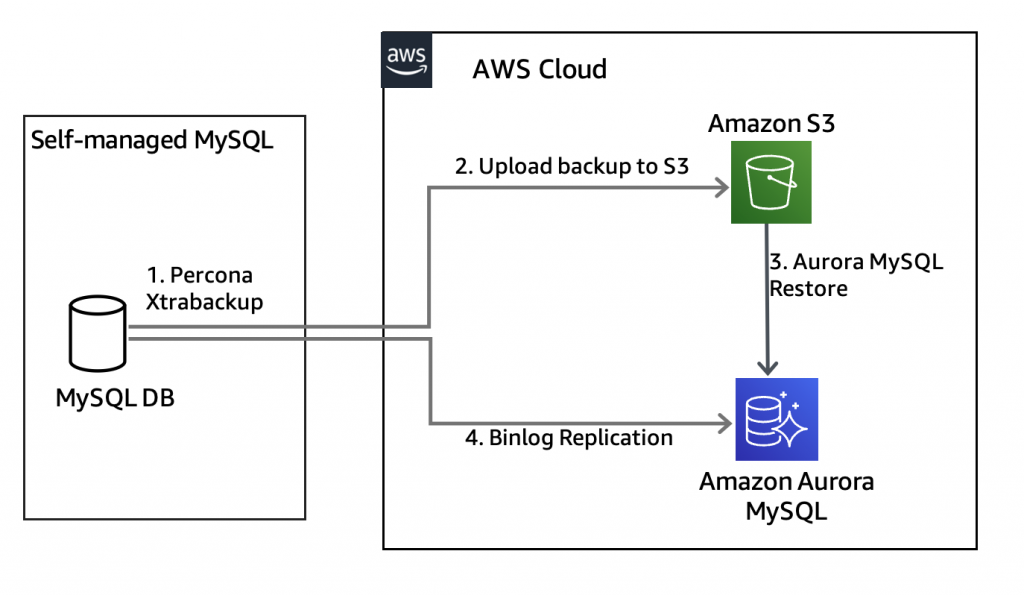
Migration options for MySQL to Amazon RDS for MySQL or Amazon Aurora MySQL
MySQL is one of the most popular open-source relational databases in the world. Many customers choose to run their MySQL workload in Amazon Relational Database Service (Amazon RDS) for MySQL because it takes care of heavy lifting tasks such as hardware provisioning, database setup, patching, configuration, monitoring, backups, and scaling. Amazon Aurora is a great […]
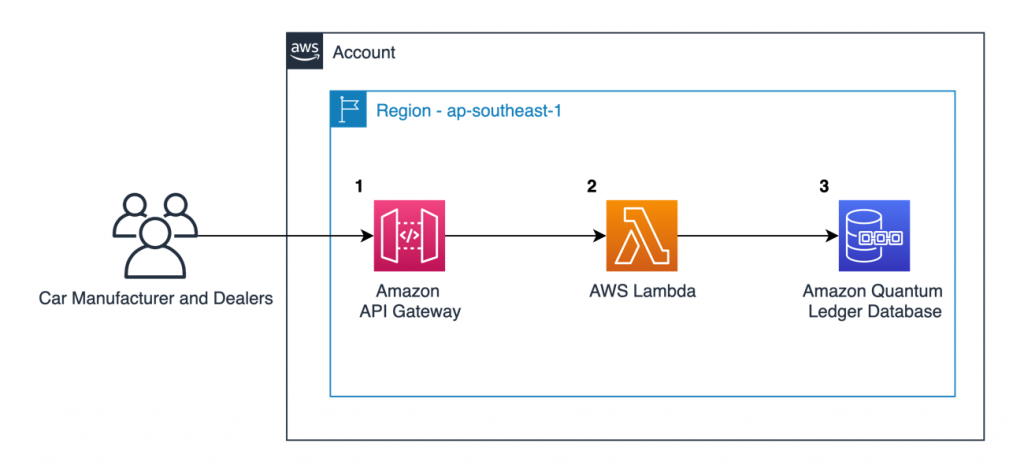
Use Amazon QLDB as an immutable key-value store with a REST API and JSON
Amazon Quantum Ledger Database (Amazon QLDB) is a fully managed ledger database service. It’s very helpful when you need to keep your data immutable and maintain a cryptographically verifiable transaction log of all changes made to it. For example, when you need to track data that will be audited in the future, such as financial […]
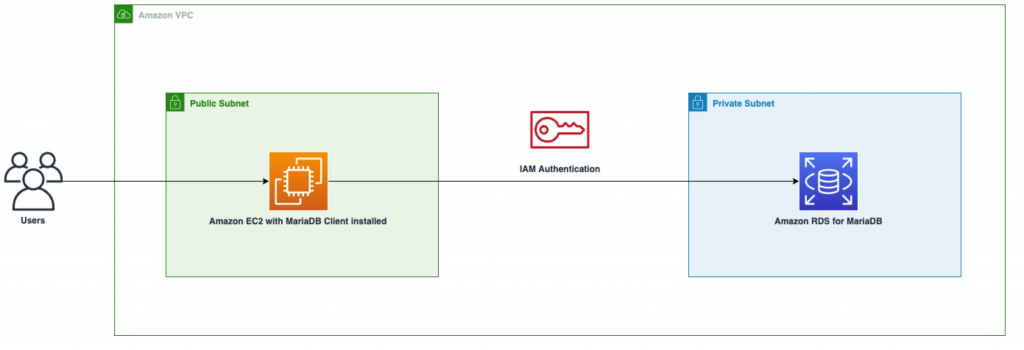
IAM authentication with Amazon RDS for MariaDB
In 2018, we introduced the ability to use AWS Identity and Access Management (IAM) authentication to manage database access for Amazon Relational Database Service for MySQL (Amazon RDS for MySQL), Amazon Relational Database Service for PostgreSQL (Amazon RDS for PostgreSQL), Amazon Aurora MySQL-Compatible Edition, and Amazon Aurora PostgreSQL-Compatible Edition. This feature allows you to use […]

Rethink Oracle Standard Edition Two on Amazon RDS for Oracle
Organizations are adopting the cloud as the standard and actively evaluating their database needs. Amazon Relational Database Service (Amazon RDS) for Oracle is a managed service that makes it easy to set up, operate, and scale Oracle deployments in the cloud. This helps migrate your legacy Oracle database to Amazon RDS for Oracle and, as […]

How to sign Ethereum EIP-1559 transactions using AWS KMS
Ethereum is a popular public blockchain that enables you to create decentralized applications across a variety of use cases. In 2020 and 2021, it became widely used for decentralized finance (DeFi) apps and non-fungible token (NFT) apps. Due to its permissionless nature, it’s available to every user by just setting up an Ethereum account. These […]

Integrate Amazon RDS Custom for Oracle with Amazon EFS
End of support notice: On March 31, 2027, AWS will end support for Amazon RDS Custom for Oracle. Existing customers can continue using the service until March 31, 2027. After March 31, 2027, you will no longer be able to access RDS Custom for Oracle resources including database instances, snapshots, and custom engine versions. We […]