AWS Database Blog

Schedule Amazon RDS stop and start using AWS Lambda
Amazon Relational Database Service (Amazon RDS) makes it easy to set up, operate, and scale a relational database in the cloud. Traditional relational databases require time spent on capacity planning, maintenance, backup, and recovery; a substantial amount of a database administrator’s time is lost to these tasks. Amazon RDS helps DBAs to focus on other […]

Amazon QLDB data streaming via AWS CDK
Amazon Quantum Ledger Database (Amazon QLDB) is a fully managed ledger database that provides a transparent, immutable, and cryptographically verifiable transaction log. You can use Amazon QLDB to track each application data change, and it maintains a complete and verifiable history of changes over time. Because of those key features, banking customers have adopted Amazon QLDB as a database […]
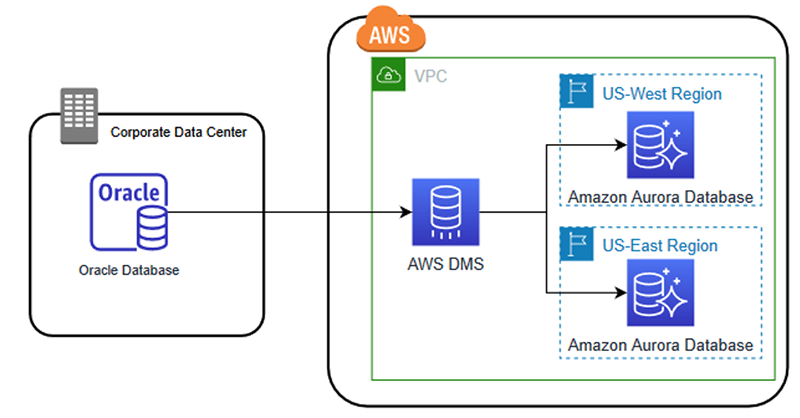
Split data across Regions as it’s migrated from on-premises Oracle to Amazon Aurora PostgreSQL while maintaining data integrity using AWS DMS – Part 2
As enterprises migrate large applications and large on-premises backend databases to AWS, you likely want to place the databases closer to your customers for low latency and better application performance. This isn’t always easy because your customers may be located all over and on-premises data centers are usually at a handful of locations. This means […]
Split data across Regions as it’s migrated from on-premises Oracle to Amazon Aurora PostgreSQL while maintaining data integrity using AWS DMS – Part 1
As enterprises migrate large applications and large on-premises backend databases to AWS, you likely want to place the databases closer to your customers for low latency and better application performance. This isn’t always easy because your customers may be located all over and on-premises data centers are usually at a handful of locations. This means […]

Use Python SQLAlchemy ORM to interact with an Amazon Aurora database from a serverless application
As organizations work to modernize their traditional applications to an event-driven, serverless model, a question that comes up frequently is how the object-relational mapping (ORM) layer should be managed. Packaging it with AWS Lambda functions increases its size and adds a cognitive burden on the development team to track. In addition, many organizations have requirements […]

Introducing Amazon DocumentDB (with MongoDB compatibility) global clusters
Amazon DocumentDB (with MongoDB compatibility) is a fast, scalable, highly available, and fully managed document database service that supports MongoDB workloads. You can use the same MongoDB 3.6, 4.0, or 5.0 application code, drivers, and tools to run, manage, and scale workloads on Amazon DocumentDB without worrying about managing the underlying infrastructure. As a document […]

Upgrade Amazon RDS for MySQL or MariaDB database schemas with minimal downtime
Modifying the schema of an SQL database can be time-consuming, resource-intensive, and error-prone, and often requires long application maintenance windows that negatively affect the end-user experience. Amazon Relational Database Service (Amazon RDS) for MySQL or MariaDB allows you to upgrade your schema while your application is still running, with minimal or zero downtime. In this post, […]

Deploy an Ethereum node on Amazon Managed Blockchain
Amazon Managed Blockchain support for managed Ethereum nodes makes it possible to build your own decentralized applications (dapps) without having to worry about maintaining reliable Ethereum nodes for relaying blockchain transactions or querying the state of blockchain data. The decentralized architecture of the Ethereum network makes it possible to create unstoppable applications that can be […]

Data masking using AWS DMS
Data replication across data stores is a complex, multiphase process that includes assessment, schema conversion, data migration, data validation, and implementation of data access and security policies. As data is replicated across data stores, most organizations have compliance needs to protect personally identifiable information (PII) or commercially sensitive data from users that shouldn’t have access […]
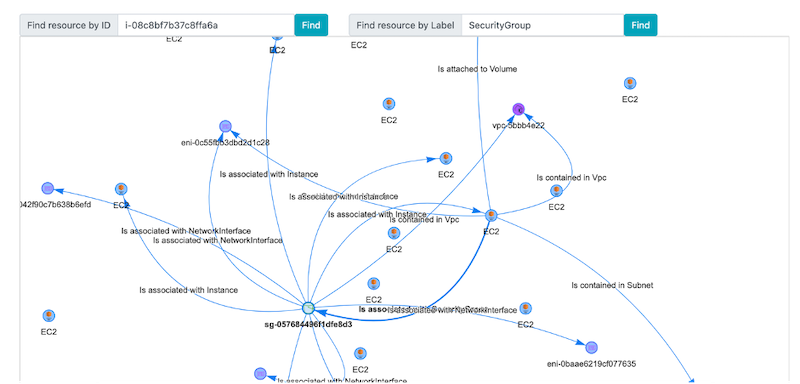
Visualize your AWS Infrastructure with Amazon Neptune and AWS Config
As an organization, you run critical applications on AWS, and the infrastructure that runs those critical applications can be spread across different accounts and have complex relationships. When you want to understand the landscape of your existing setup, it can seem daunting to go through lists of resources and try to understand how the resources […]