AWS Compute Blog
Tag: Amazon EC2

Optimizing deep learning on P3 and P3dn with EFA
This post is written by Rashika Kheria, Software Engineer, Purna Sanyal, Senior Solutions Architect, Strategic Account and James Jeun, Sr. Product Manager, and Amr Ragab The Amazon EC2 P3dn.24xlarge instance is the latest addition to the Amazon EC2 P3 instance family, with upgrades to several components. This high-end size of the P3 family allows users to […]

Automating notifications when AMI permissions change
This post is courtesy of Ernes Taljic, Solutions Architect and Sudhanshu Malhotra, Solutions Architect This post demonstrates how to automate alert notifications when users modify the permissions of an Amazon Machine Image (AMI). You can use it as a blueprint for a wide variety of alert notifications by making simple modifications to the events that you […]

Automating your lift-and-shift migration at no cost with CloudEndure Migration
This post is courtesy of Gonen Stein, Head of Product Strategy, CloudEndure Acquired by AWS in January 2019, CloudEndure offers a highly automated migration tool to simplify and expedite rehost (lift-and-shift) migrations. AWS recently announced that CloudEndure Migration is now available to all customers and partners at no charge. Each free CloudEndure Migration license provides 90 […]

Using new vCPU-based On-Demand Instance limits with Amazon EC2
This post is contributed by Saloni Sonpal, Senior Product Manager, Amazon EC2 As an Amazon EC2 customer running On-Demand Instances, you can increase or decrease your compute capacity depending on your application’s needs, and only pay for what you use. EC2 implements instance limits, which give you a highly elastic experience while protecting you from […]

Sharing automated blueprints for Amazon ECS continuous delivery using AWS Service Catalog
This post is contributed by Mahmoud ElZayet | Specialist SA – Dev Tech, AWS Modern application development processes enable organizations to improve speed and quality continually. In this innovative culture, small, autonomous teams own the entire application life cycle. While such nimble, autonomous teams speed product delivery, they can also impose costs on compliance, […]
Optimizing Amazon ECS task density using awsvpc network mode
This post is contributed by Tony Pujals | Senior Developer Advocate, AWS AWS recently increased the number of elastic network interfaces available when you run tasks on Amazon ECS. Use the account setting called awsvpcTrunking. If you use the Amazon EC2 launch type and task networking (awsvpc network mode), you can now run more […]
Using AWS App Mesh with Fargate
This post is contributed by Tony Pujals | Senior Developer Advocate, AWS AWS App Mesh is a service mesh, which provides a framework to control and monitor services spanning multiple AWS compute environments. My previous post provided a walkthrough to get you started. In it, I showed deploying a simple microservice application to Amazon ECS […]

New: Using Amazon EC2 Instance Connect for SSH access to your EC2 Instances
This post is courtesy of Saloni Sonpal – Senior Product Manager – Amazon EC2 Today, AWS is introducing Amazon EC2 Instance Connect, a new way to control SSH access to your EC2 instances using AWS Identity and Access Management (IAM). About Amazon EC2 Instance Connect While infrastructure as code (IaC) tools such as Chef and Puppet […]

Optimizing Network Intensive Workloads on Amazon EC2 A1 Instances
This post courtesy of Ali Saidi, AWS, Principal Engineer At re:Invent 2018, AWS announced the Amazon EC2 A1 instance. The A1 instances are powered by our internally developed Arm-based AWS Graviton processors and are up to 45% less expensive than other instance types with the same number of vCPUs and DRAM. These instances are based […]
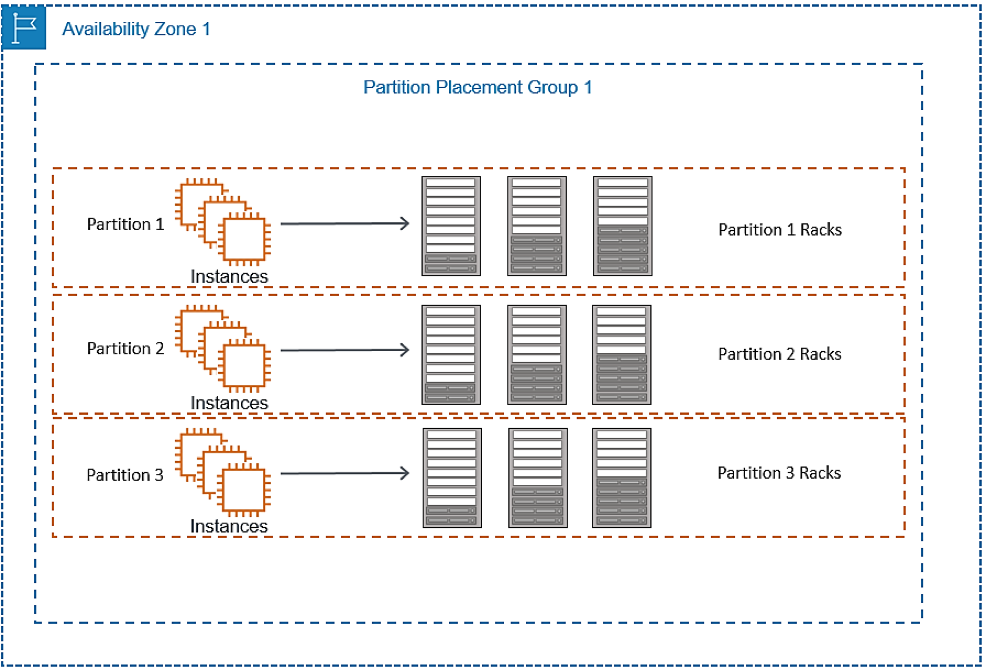
Using partition placement groups for large distributed and replicated workloads in Amazon EC2
This post is contributed by Ankit Jain – Sr. Product Manager, Amazon EC2 and Harsha Warrdhan Sharma – Global Account Solutions Architect at AWS Before we introduced partition placement groups, customers deployed large distributed and replicated workloads across multiple Availability Zones to reduce correlated failures. This new Amazon EC2 placement strategy helps reduce the likelihood […]